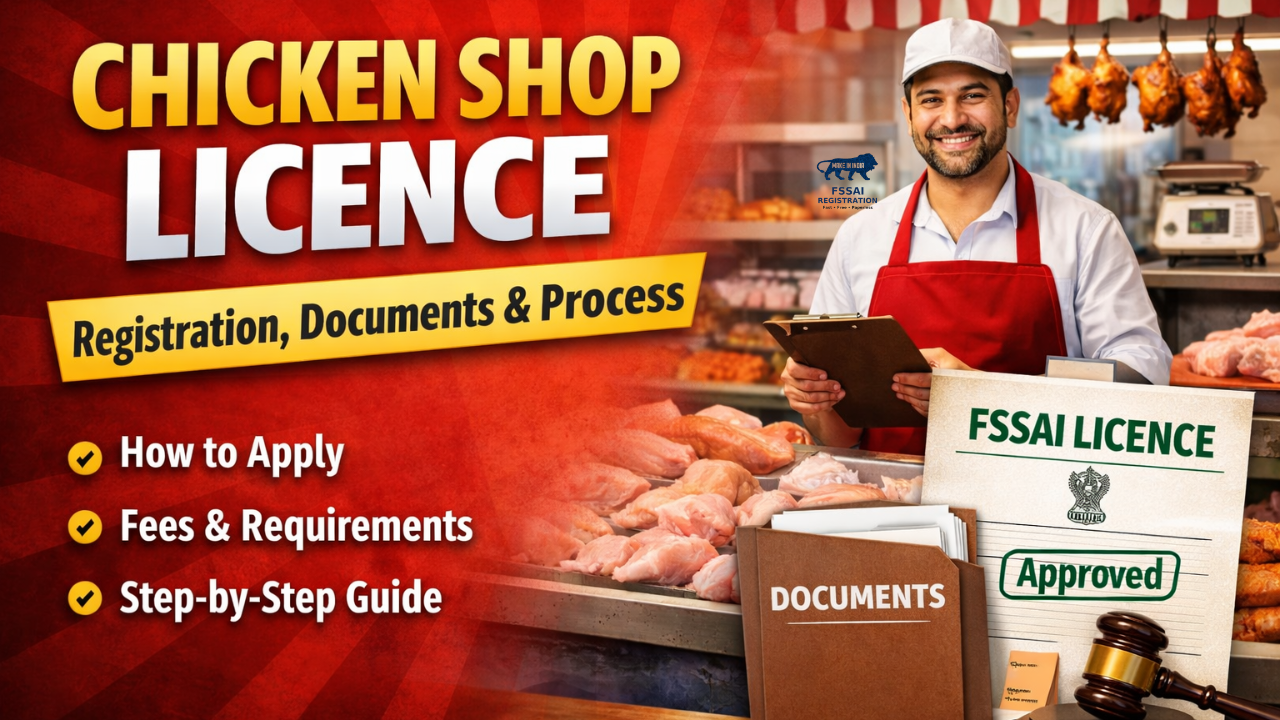
Chicken Shop Licence | Meat Shop License Registration | Documents & Process
Starting a chicken shop or meat shop in India can be a profitable business because poultry products are in high demand across the country. However, before opening a poultry or chicken shop, it is important to obtain the necessary licenses and registrations from the government. A Chicken Shop Licence ensures that the business follows hygiene standards, food safety rules, and local municipal regulations.
In this detailed guide, you will learn everything about the chicken shop licence in India, including required documents, the registration process, fees, and legal requirements.
What is a Chicken Shop Licence?
A chicken shop licence is an official approval required to legally sell chicken or poultry products. It is issued by local municipal authorities and food safety departments to ensure that meat shops follow proper hygiene, sanitation, and food safety standards.
This licence is mandatory for businesses that sell:
-
Raw chicken
-
Fresh poultry meat
-
Frozen chicken products
-
Processed poultry items
Without proper licensing, running a chicken shop may lead to penalties or closure of the business.
Why is a Chicken Shop Licence Important?
Obtaining a licence for a chicken shop is important for several reasons:
1. Legal Compliance
A licence allows the shop owner to operate legally and avoid fines or legal actions.
2. Food Safety
Government authorities ensure that poultry products are stored, processed, and sold safely.
3. Customer Trust
Licensed shops build confidence among customers regarding hygiene and quality.
4. Business Expansion
A registered business can apply for loans, government schemes, and supplier partnerships.
Licences Required to Open a Chicken Shop in India
To run a chicken shop legally, several licences may be required depending on the location and scale of the business.
1. FSSAI Licence
Food businesses in India must obtain an FSSAI licence to sell edible products. This licence ensures that the poultry products meet food safety standards.
2. Trade Licence
A trade licence is issued by the municipal corporation or local authority allowing a business to operate in a particular area.
3. Shop and Establishment Registration
This registration is required under state laws to regulate working conditions and employee rights in commercial establishments.
4. Local Municipal Permission
Municipal authorities may require approval for running meat shops to maintain sanitation and waste disposal standards.
5. Pollution Control Approval
Some areas require approval from the pollution control board due to waste disposal and hygiene issues.
Documents Required for Chicken Shop Licence
To apply for a chicken shop licence, you may need to submit the following documents:
-
Aadhaar card or identity proof of the owner
-
PAN card
-
Address proof of the business location
-
Shop rent agreement or ownership proof
-
Passport-size photographs
-
Layout plan of the shop
-
Electricity bill
-
Food safety compliance declaration
Additional documents may be required depending on local regulations.
Chicken Shop Licence Registration Process
The process for obtaining a chicken shop licence usually involves the following steps:
Step 1: Choose Business Structure
First decide whether the shop will operate as:
-
Sole proprietorship
-
Partnership
-
Private limited company
Small chicken shops generally operate as sole proprietorships.
Step 2: Apply for FSSAI Registration
Submit an online application through the official food safety portal.
Step 3: Apply for Trade Licence
Visit the municipal corporation office or their online portal to apply for a trade licence.
Step 4: Submit Documents
Upload or submit the required documents along with the application form.
Step 5: Inspection
Authorities may conduct a physical inspection of the shop to check hygiene and sanitation conditions.
Step 6: Licence Approval
Once verification is completed, the licence will be issued.
Chicken Shop Licence Fees
The cost of a chicken shop licence varies depending on the type of licence and location.
Typical fees may include:
-
FSSAI basic registration fee: ₹100 per year
-
Trade licence fee: ₹1,000 – ₹5,000 per year
-
Shop and establishment registration: ₹500 – ₹2,000
Actual fees may differ depending on the state and municipality.
Hygiene Requirements for Chicken Shops
Authorities strictly monitor hygiene in poultry businesses. Some important hygiene requirements include:
-
Proper refrigeration for meat storage
-
Clean cutting surfaces and equipment
-
Safe waste disposal system
-
Pest control measures
-
Regular sanitation of the shop
Failure to maintain hygiene standards may result in licence cancellation.
Benefits of Getting a Chicken Shop Licence
1. Legal Business Operation
A licence protects the shop owner from penalties or legal action.
2. Better Business Opportunities
Licensed businesses can supply products to restaurants, hotels, and supermarkets.
3. Consumer Confidence
Customers prefer buying from licensed shops that follow food safety standards.
4. Financial Support
Registered businesses can apply for business loans and government schemes.
Penalty for Running a Chicken Shop Without Licence
Operating a poultry or chicken shop without proper licences may lead to:
-
Heavy fines
-
Shop closure
-
Legal action by authorities
Therefore, it is always recommended to obtain all required approvals before starting the business.
Tips for Starting a Successful Chicken Shop
If you are planning to start a poultry shop, consider these tips:
-
Choose a busy market location
-
Maintain high hygiene standards
-
Use proper refrigeration systems
-
Offer fresh and quality products
-
Follow all food safety regulations
These steps will help in building a successful and trusted business.
Conclusion
Opening a chicken shop can be a profitable business opportunity, but it requires proper legal compliance. Obtaining a chicken shop licence ensures that your business follows food safety standards and municipal regulations.
By completing the required registrations, submitting documents, and maintaining hygiene standards, you can operate your poultry business smoothly and legally.
If you are planning to start a chicken shop, make sure to apply for the necessary licences before launching your business.
FAQs
1. Is a chicken shop licence mandatory in India?
Yes, a licence is required to legally sell poultry or meat products.
Source: https://fssai.gov.in
2. Which licence is required for a chicken shop?
You may need FSSAI registration, trade licence, and shop establishment registration.
3. How much does a chicken shop licence cost?
The cost usually ranges from ₹100 to ₹5,000 depending on the licence type.
4. Can I apply for a chicken shop licence online?
Yes, some licences like FSSAI registration can be applied for online.
5. How long does it take to get a chicken shop licence?
Approval usually takes 7–30 days depending on the authority.
6. Is inspection required for a chicken shop licence?
Yes, authorities may inspect the shop for hygiene and sanitation compliance.
7. Can I run a chicken shop from a rented property?
Yes, but you must provide a valid rent agreement or NOC.
8. Do small poultry shops need FSSAI registration?
Yes, even small food businesses must obtain FSSAI registration.
Source: https://foscos.fssai.gov.in
9. What happens if a chicken shop operates without a licence?
Authorities may impose fines or close the shop.
10. Can I sell frozen chicken with the same licence?
Yes, but proper storage and food safety rules must be followed.
11. Is GST registration required for a chicken shop?
GST registration is required only if turnover crosses the prescribed limit.
Source: https://www.gst.gov.in
12. Which authority issues the trade licence?
Trade licences are issued by the municipal corporation or local authority.
Source: https://services.india.gov.in
13. Can a chicken shop licence be renewed?
Yes, licences must be renewed periodically.
Source: https://foscos.fssai.gov.in
14. Do I need a pollution control certificate?
In some areas, approval may be required due to waste disposal concerns.
Source: https://cpcb.nic.in
15. Is food safety training required for chicken shop owners?
Some states encourage food safety training under FSSAI guidelines.
Source: https://fostac.fssai.gov.in
1. क्या रजिस्ट्रेशन सालाना नवीकरण होता है?
2. क्या बिना GST नंबर के MSME पंजीकरण हो सकता है?
3. 12 अंकों का एमएसएमई पंजीकरण नंबर क्या है?
4. MSME प्रमाणपत्र क्या है?
5. MSME के अंतर्गत कौन-कौन से उद्योग आते हैं?
6. MSME के लिए कौन पात्र है?
- How to register on GeM portal
- GeM पोर्टल हेल्पलाइन नंबर 2026| कस्टमर केयर, ईमेल | टेंडर सहायता
- GeM पोर्टल क्या है | रजिस्ट्रेशन प्रोसेस, फायदे | सरकारी ऑर्डर पाने का तरीका (2026)
- एमएसएमई पंजीकरण 2026 | प्रक्रिया, लाभ, दस्तावेज़ | Udyam Guide
- जेम लॉगिन: GeM Login और रजिस्ट्रेशन की पूरी जानकारी

