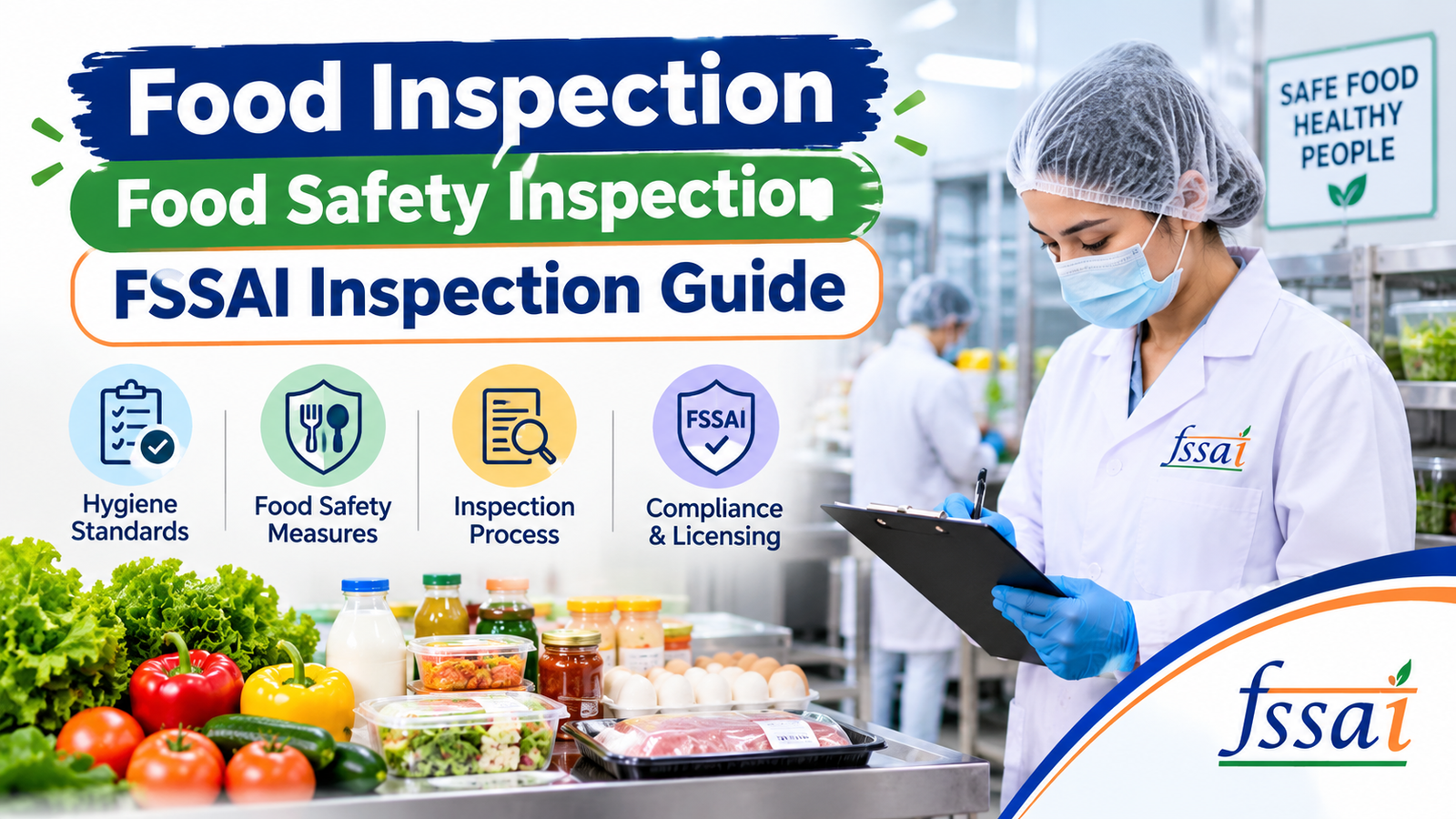
Food Inspection | Food Safety Inspection | FSSAI Inspection Guide
Food Inspection यानी खाद्य निरीक्षण, खाद्य पदार्थों की सुरक्षा, गुणवत्ता और स्वच्छता सुनिश्चित करने की एक महत्वपूर्ण प्रक्रिया है। भारत में Restaurant, Hotel, Food Manufacturing Unit, Bakery, Catering Business, Food Warehouse, Retailer, Cloud Kitchen और अन्य Food Business Operators के लिए food safety compliance बेहद महत्वपूर्ण है। किसी भी eligible food business के लिए सही FSSAI Licence रखना और food safety standards का पालन करना compliance का एक महत्वपूर्ण हिस्सा है।
भारत में खाद्य सुरक्षा का नियमन मुख्य रूप से Food Safety and Standards Authority of India (FSSAI) द्वारा किया जाता है। FSSAI, Food Safety and Standards Act, 2006 के तहत खाद्य सुरक्षा से संबंधित मानक निर्धारित करता है और देश में food safety की निगरानी एवं अनुपालन व्यवस्था को मजबूत करने का काम करता है।
Food Inspection के दौरान किसी खाद्य व्यवसाय के परिसर, खाद्य पदार्थों के रखरखाव, साफ-सफाई, कर्मचारियों की hygiene, storage conditions, equipment, pest control, documentation और अन्य food safety practices की जांच की जा सकती है। Inspection का उद्देश्य यह देखना होता है कि food business निर्धारित food safety requirements का पालन कर रहा है या नहीं।
इस ब्लॉग में हम विस्तार से जानेंगे कि Food Inspection क्या है, इसकी आवश्यकता क्यों होती है, Food Safety Officer क्या जांचता है, inspection कैसे होता है, कौन-कौन से documents जरूरी हो सकते हैं और food business inspection के लिए कैसे तैयार किया जा सकता है। साथ ही, हम यह भी समझेंगे कि FSSAI Licence और food safety compliance का Food Inspection के दौरान क्या महत्व होता है।
Food Inspection क्या है?
Food Inspection एक व्यवस्थित प्रक्रिया है जिसमें किसी Food Business की facilities, food handling practices, hygiene, sanitation, storage, processing और संबंधित compliance requirements की जांच की जाती है।
इसका मुख्य उद्देश्य यह पता लगाना होता है कि खाद्य व्यवसाय में भोजन को सुरक्षित रखने और उपभोक्ताओं को सुरक्षित खाद्य पदार्थ उपलब्ध कराने के लिए आवश्यक नियमों और प्रक्रियाओं का पालन किया जा रहा है या नहीं।
उदाहरण के लिए, एक Restaurant के inspection में निम्न चीजें देखी जा सकती हैं:
-
Kitchen की cleanliness
-
Food storage
-
Raw और cooked food का separation
-
कर्मचारियों की personal hygiene
-
Refrigeration व्यवस्था
-
Pest control
-
साफ पानी की उपलब्धता
-
Waste disposal
-
Food handling practices
-
FSSAI registration/licence से संबंधित जानकारी
-
आवश्यक records और documents
वहीं, किसी Food Manufacturing Unit में manufacturing process, raw materials, equipment, quality control और processing conditions जैसे अतिरिक्त पहलुओं की जांच हो सकती है।
भारत में Food Inspection क्यों महत्वपूर्ण है?
खाद्य पदार्थों में contamination कई अलग-अलग चरणों में हो सकता है। यह समस्या manufacturing से लेकर transportation, storage, preparation और serving तक किसी भी चरण में उत्पन्न हो सकती है।
Food Inspection के माध्यम से संभावित food safety risks की पहचान करने में सहायता मिलती है।
इसके प्रमुख उद्देश्य हैं:
1. उपभोक्ताओं की सुरक्षा
Food inspection का सबसे महत्वपूर्ण उद्देश्य consumers को unsafe या contaminated food से बचाने में सहायता करना है।
2. Food Hygiene बनाए रखना
Inspection से food premises की cleanliness और hygiene practices की समीक्षा की जा सकती है।
3. Contamination Risk कम करना
Improper food handling, cross-contamination और खराब storage conditions जैसे जोखिमों की पहचान की जा सकती है।
4. Regulatory Compliance
Food businesses को लागू food safety requirements के अनुसार अपना संचालन करने के लिए compliance बनाए रखना आवश्यक होता है।
5. Food Quality में सुधार
सही food handling और storage practices से food quality को बनाए रखने में मदद मिलती है।
FSSAI और Food Inspection का क्या संबंध है?
भारत में FSSAI खाद्य सुरक्षा व्यवस्था का प्रमुख regulatory authority है। FSSAI science-based food standards तैयार करने, compliance को facilitate करने और safe एवं wholesome food की उपलब्धता सुनिश्चित करने के लिए कार्य करता है।
Food Safety and Standards Authority of India की आधिकारिक जानकारी के अनुसार, food safety regulation में standards, licensing, inspection, testing और surveillance जैसी व्यवस्थाएं महत्वपूर्ण भूमिका निभाती हैं।
Food inspection की field-level activities में Food Safety Officers महत्वपूर्ण भूमिका निभाते हैं।
FSSAI के Food Safety Officers Manual में licensing and registration, inspection and audit, sampling, food testing तथा enforcement से संबंधित प्रक्रियाओं को शामिल किया गया है।
Food Safety Officer कौन होता है?
Food Safety Officer (FSO) food safety enforcement व्यवस्था में एक महत्वपूर्ण field-level अधिकारी होता है।
Food Safety Officer का कार्य परिस्थितियों और लागू नियमों के अनुसार food business का निरीक्षण करना, compliance की जांच करना, food samples लेना तथा inspection findings को document करना आदि हो सकता है।
Inspection के दौरान अधिकारी यह देख सकता है कि food business:
-
आवश्यक registration/licence requirements का पालन कर रहा है या नहीं
-
Food hygiene बनाए रखता है या नहीं
-
Food को उचित तरीके से store करता है या नहीं
-
कर्मचारियों द्वारा hygiene practices अपनाई जा रही हैं या नहीं
-
Food contamination का कोई risk तो नहीं है
-
आवश्यक records maintain किए जा रहे हैं या नहीं
-
लागू food safety requirements का पालन कर रहा है या नहीं
Food Inspection में किन चीजों की जांच हो सकती है?
Food inspection केवल kitchen की सफाई तक सीमित नहीं होता। Food business के प्रकार और inspection के उद्देश्य के अनुसार अलग-अलग areas की जांच हो सकती है।
1. FSSAI Registration या Licence
Food business के पास उसकी गतिविधियों के अनुसार आवश्यक FSSAI registration या licence होना महत्वपूर्ण है।
Business को यह भी सुनिश्चित करना चाहिए कि registration/licence की जानकारी उसके वास्तविक business activities और premises से संबंधित हो।
2. Food Premises की सफाई
Inspection के दौरान premises की overall cleanliness देखी जा सकती है।
इसमें शामिल हो सकते हैं:
-
Floor की सफाई
-
Walls और ceilings
-
Kitchen area
-
Food preparation surfaces
-
Storage area
-
Washing area
-
Drainage
-
Waste disposal area
Food preparation areas में गंदगी या जमा हुआ waste contamination risk बढ़ा सकता है।
3. Personal Hygiene
Food handlers की personal hygiene food safety का एक महत्वपूर्ण हिस्सा है।
Inspection के दौरान निम्न practices पर ध्यान दिया जा सकता है:
-
साफ कपड़े
-
हाथों की उचित सफाई
-
Hair covering
-
उचित protective clothing
-
Food handling के दौरान hygiene
-
खुले घावों को उचित तरीके से cover करना
-
बीमारी की स्थिति में food handling से संबंधित उचित precautions
Food handlers को नियमित रूप से hygiene practices के बारे में training देना भी उपयोगी है।
4. Food Storage की जांच
Food को सही temperature और appropriate conditions में रखना food safety के लिए आवश्यक है।
Inspection में देखा जा सकता है कि:
-
Raw food सही तरीके से रखा गया है या नहीं
-
Cooked food और raw food अलग हैं या नहीं
-
Refrigerated products उचित तरीके से रखे गए हैं या नहीं
-
Food containers साफ हैं या नहीं
-
Storage shelves व्यवस्थित हैं या नहीं
-
Food को contamination से बचाया जा रहा है या नहीं
5. Cross-Contamination की रोकथाम
Cross-contamination तब हो सकता है जब harmful microorganisms या contaminants एक food या surface से दूसरे food तक पहुंच जाते हैं।
उदाहरण के लिए, raw meat के लिए इस्तेमाल होने वाले utensils को बिना उचित cleaning के cooked food के लिए इस्तेमाल करना contamination का risk पैदा कर सकता है।
इसलिए businesses को:
-
Raw और cooked food अलग रखना चाहिए
-
अलग utensils का उचित उपयोग करना चाहिए
-
Food-contact surfaces को साफ रखना चाहिए
-
Hands और equipment की उचित cleaning करनी चाहिए
6. Temperature Control
कुछ खाद्य पदार्थों के लिए temperature control बहुत महत्वपूर्ण होता है।
Food businesses को applicable requirements के अनुसार:
-
Refrigeration
-
Freezing
-
Cooking
-
Hot holding
-
Cold storage
जैसी प्रक्रियाओं पर उचित नियंत्रण रखना चाहिए।
Temperature records, जहां applicable हों, व्यवस्थित रूप से maintain किए जा सकते हैं।
7. Pest Control
Food premises में insects, rodents और अन्य pests food contamination का कारण बन सकते हैं।
इसलिए inspection के दौरान pest control व्यवस्था पर भी ध्यान दिया जा सकता है।
Business को:
-
नियमित pest control करवाना
-
entry points को नियंत्रित करना
-
food को covered containers में रखना
-
waste को समय पर हटाना
-
premises को साफ रखना
जैसे preventive measures अपनाने चाहिए।
8. Water Quality और Sanitation
Food preparation और cleaning में इस्तेमाल होने वाला पानी सुरक्षित होना महत्वपूर्ण है।
Inspection में water source, sanitation facilities और cleaning arrangements जैसे factors की जांच परिस्थितियों के अनुसार की जा सकती है।
Food business को साफ पानी और उचित sanitation व्यवस्था सुनिश्चित करनी चाहिए।
9. Equipment और Utensils
Food preparation में इस्तेमाल होने वाले equipment और utensils food safety में महत्वपूर्ण भूमिका निभाते हैं।
जांच के दौरान यह देखा जा सकता है कि:
-
Equipment साफ हैं या नहीं
-
Food-contact surfaces hygienic हैं या नहीं
-
Equipment properly maintained हैं या नहीं
-
Damaged utensils का इस्तेमाल तो नहीं हो रहा
-
Cleaning procedures follow किए जा रहे हैं या नहीं
10. Food Labelling
Packaged food businesses के लिए labelling compliance महत्वपूर्ण है।
Product के प्रकार और लागू requirements के अनुसार label पर आवश्यक information हो सकती है, जैसे:
-
Product name
-
Ingredients
-
Net quantity
-
Batch/Lot information
-
Date-related information
-
FSSAI licence details
-
Manufacturer information
-
अन्य applicable declarations
Business को अपने product category पर लागू current labelling requirements की जांच करनी चाहिए।
Food Inspection Process कैसे होता है?
Food inspection का exact process business type और circumstances के अनुसार अलग हो सकता है। सामान्य रूप से इसे निम्न चरणों में समझा जा सकता है।
Step 1: Food Business की पहचान
सबसे पहले संबंधित food business और उसके nature of operation को समझा जाता है।
Step 2: Premises Inspection
Food premises की physical conditions और hygiene practices की जांच की जा सकती है।
Step 3: Documents और Records की जांच
आवश्यकता के अनुसार licence, registration और relevant records देखे जा सकते हैं।
Step 4: Food Handling Practices की जांच
Food preparation, storage और handling practices का निरीक्षण किया जा सकता है।
Step 5: Sampling, यदि आवश्यक हो
कुछ परिस्थितियों में food samples लिए जा सकते हैं और निर्धारित procedure के अनुसार testing के लिए भेजे जा सकते हैं।
Step 6: Findings का Documentation
Inspection के दौरान पाए गए observations और compliance-related findings को document किया जा सकता है।
Step 7: Corrective Action
यदि deficiencies या non-compliance पाए जाते हैं, तो लागू regulatory procedure के अनुसार corrective action की आवश्यकता हो सकती है।
Food Inspection Checklist
Food business अपने internal review के लिए एक basic Food Inspection Checklist तैयार कर सकता है।
Premises Checklist
-
परिसर साफ है
-
Floors साफ हैं
-
Walls और ceilings maintained हैं
-
Proper drainage उपलब्ध है
-
Waste disposal व्यवस्था है
-
Pest activity नहीं है
Kitchen Checklist
-
Kitchen साफ है
-
Food-contact surfaces clean हैं
-
Utensils properly cleaned हैं
-
Raw और cooked food अलग हैं
-
Food covered है
-
Cleaning schedule follow हो रहा है
Storage Checklist
-
Food सही तरीके से stored है
-
Refrigeration व्यवस्था उचित है
-
Expired/damaged food अलग किया गया है
-
Storage area clean है
-
Containers properly closed हैं
Employee Hygiene Checklist
-
Staff personal hygiene maintain करता है
-
Hands properly washed किए जाते हैं
-
Suitable protective clothing उपलब्ध है
-
Food handlers को hygiene training दी जाती है
Documentation Checklist
-
FSSAI registration/licence information available है
-
Relevant records maintained हैं
-
Cleaning records available हैं, जहां applicable हों
-
Pest control records available हैं, जहां applicable हों
-
Food safety-related documents व्यवस्थित हैं
Food Inspection के लिए कौन-कौन से Documents तैयार रखें?
Documents business type और applicable requirements के अनुसार अलग हो सकते हैं। सामान्य रूप से food business को relevant documents व्यवस्थित रखने चाहिए।
इनमें शामिल हो सकते हैं:
-
FSSAI Registration/License
-
Business-related documents
-
Food safety management records
-
Cleaning and sanitation records
-
Pest control records
-
Water testing records, जहां applicable हों
-
Supplier records
-
Purchase invoices
-
Food testing reports, जहां applicable हों
-
Employee hygiene/training records
-
Temperature monitoring records, जहां applicable हों
यह ध्यान रखना जरूरी है कि हर food business के लिए सभी documents समान नहीं होते।
Food Inspection में होने वाली सामान्य गलतियां
कई food businesses छोटी-छोटी compliance समस्याओं के कारण inspection में difficulties का सामना कर सकते हैं।
कुछ common issues हैं:
1. Poor Cleaning
Kitchen या storage area की inadequate cleaning।
2. Improper Food Storage
Food को गलत तरीके से रखना या food containers को properly cover न करना।
3. Cross-Contamination Risk
Raw और cooked food के बीच उचित separation न होना।
4. Poor Personal Hygiene
Food handlers द्वारा basic hygiene practices का पालन न करना।
5. Pest Problems
Rodents, insects या अन्य pest activity का होना।
6. Expired Food
Expired या deteriorated food का premises में उपलब्ध होना।
7. Incomplete Records
Required records का properly maintain न किया जाना।
8. Incorrect Labelling
Packaged food पर applicable labelling requirements का पालन न करना।
Food Inspection के लिए Business कैसे तैयार करें?
Food inspection की तैयारी केवल inspection की तारीख आने पर नहीं करनी चाहिए। Food safety को daily operational practice का हिस्सा बनाना बेहतर है।
Daily Cleaning Schedule बनाएं
Kitchen और food preparation areas के लिए cleaning schedule तैयार करें।
Staff Training करें
Employees को handwashing, food handling, personal hygiene और cross-contamination prevention की training दें।
Storage व्यवस्थित रखें
Raw materials और finished products को व्यवस्थित तरीके से store करें।
Records Maintain करें
जहां applicable हो, cleaning, pest control, temperature और training records को व्यवस्थित रखें।
Internal Inspection करें
समय-समय पर खुद अपने premises का inspection करें और deficiencies को identify करके सुधारें।
Licence Information Updated रखें
अपने FSSAI registration/licence और business details को current requirements के अनुसार maintain करें।
Food Inspection और Food Testing में क्या अंतर है?
दोनों terms को अक्सर एक जैसा समझ लिया जाता है, लेकिन इनमें अंतर है।
Food Inspection में मुख्य रूप से food business premises, hygiene, handling practices, storage, processes और compliance conditions की जांच की जाती है।
वहीं Food Testing में food sample की laboratory analysis की जाती है ताकि निर्धारित parameters के आधार पर उसकी safety या quality का assessment किया जा सके।
सरल शब्दों में:
Inspection = Business और practices की जांच
Testing = Food sample की laboratory जांच
कुछ regulatory situations में inspection और sampling/testing एक ही enforcement process का हिस्सा हो सकते हैं।
Food Inspection और Food Safety Audit में अंतर
Food inspection और food safety audit भी पूरी तरह समान नहीं हैं।
Food Inspection regulatory compliance और field-level examination पर केंद्रित हो सकता है।
वहीं Food Safety Audit किसी food business के food safety management system और निर्धारित procedures की systematic assessment हो सकती है।
एक business internal audit का उपयोग अपनी food safety system में सुधार करने के लिए भी कर सकता है।
Food Businesses के लिए Food Safety क्यों जरूरी है?
Food safety केवल legal compliance का विषय नहीं है। यह customer trust और business reputation से भी जुड़ा है।
एक food business में खराब hygiene के कारण:
-
Customer complaints बढ़ सकती हैं
-
Food contamination का risk बढ़ सकता है
-
Business reputation प्रभावित हो सकती है
-
Regulatory action का risk हो सकता है
-
Financial losses हो सकते हैं
इसलिए food safety को business operations का नियमित हिस्सा बनाना महत्वपूर्ण है।
Food Inspection में सुधार कैसे करें?
Food business अपने inspection readiness को बेहतर बनाने के लिए एक continuous improvement approach अपना सकता है।
पहला कदम: Risks पहचानें
अपने business में contamination और hygiene risks identify करें।
दूसरा कदम: SOP बनाएं
Cleaning, storage, food handling और personal hygiene के लिए standard operating procedures तैयार करें।
तीसरा कदम: Staff को Train करें
Employees को केवल instructions देने के बजाय practical training दें।
चौथा कदम: Monitoring करें
Daily या periodic monitoring system बनाएं।
पांचवां कदम: Corrective Action लें
जो problem मिले, उसे document करके समय पर सुधारें।
छोटे Food Businesses के लिए Food Inspection Tips
छोटे restaurants, cafes, bakeries, cloud kitchens और food vendors भी basic food safety practices पर ध्यान देकर अपनी compliance बेहतर कर सकते हैं।
कुछ उपयोगी tips:
-
Kitchen को रोजाना साफ करें।
-
Food को covered containers में रखें।
-
Raw और cooked food को अलग रखें।
-
Staff की personal hygiene पर ध्यान दें।
-
Pest control को नजरअंदाज न करें।
-
Expired food को तुरंत अलग करें।
-
Refrigerator और storage areas को व्यवस्थित रखें।
-
Relevant documents आसानी से उपलब्ध रखें।
-
Staff को food safety training दें।
-
Regular internal food safety inspection करें।
Food Inspection के फायदे
एक प्रभावी inspection और compliance system से कई फायदे हो सकते हैं:
बेहतर Food Safety
Contamination risks की पहचान करने में मदद मिलती है।
बेहतर Hygiene
Business को cleanliness standards बनाए रखने में सहायता मिलती है।
Customer Trust
सुरक्षित और hygienic food practices customer confidence बढ़ाने में मदद कर सकती हैं।
Business Improvement
Inspection findings से operational weaknesses पहचानी जा सकती हैं।
Compliance Management
Food business को applicable regulatory requirements पर ध्यान देने में मदद मिलती है।
Food Inspection के दौरान Business को क्या नहीं करना चाहिए?
Inspection के दौरान food business को records या information छिपाने के बजाय regulatory requirements के अनुसार सहयोग करना चाहिए।
Business को:
-
गलत जानकारी नहीं देनी चाहिए
-
गलत या fabricated records नहीं बनाने चाहिए
-
Unsafe food को सामान्य food के साथ नहीं रखना चाहिए
-
Inspection findings को ignore नहीं करना चाहिए
-
Corrective actions में अनावश्यक देरी नहीं करनी चाहिए
किसी specific enforcement situation में लागू कानून और competent authority के निर्देशों का पालन करना चाहिए।
Food Inspection से पहले Quick Checklist
Inspection से पहले यह quick review किया जा सकता है:
Premises: साफ और hygienic है?
Kitchen: Food preparation areas साफ हैं?
Storage: Food properly stored है?
Staff: Personal hygiene maintain हो रही है?
Pest Control: Pest activity तो नहीं है?
Equipment: Equipment साफ और maintained है?
Documents: Relevant licence और records available हैं?
Food: Expired या damaged products तो नहीं हैं?
Labelling: Applicable labelling requirements पूरी हैं?
Waste: Waste disposal उचित तरीके से हो रहा है?
निष्कर्ष
Food Inspection भारत की food safety व्यवस्था का एक महत्वपूर्ण हिस्सा है। इसका उद्देश्य केवल food business में गलतियां ढूंढना नहीं है, बल्कि food safety risks की पहचान करना और सुरक्षित food handling practices को बढ़ावा देना भी है।
हर Food Business Operator को inspection को केवल regulatory requirement के रूप में नहीं बल्कि अपने business की quality और safety सुधारने के अवसर के रूप में देखना चाहिए।
Regular cleaning, proper food storage, employee hygiene, pest control, cross-contamination prevention, record maintenance और applicable FSSAI requirements का पालन food safety compliance को मजबूत बनाने में मदद कर सकता है।
Food businesses को अपने business type पर लागू वर्तमान FSSAI regulations, licensing conditions और official requirements की जानकारी रखनी चाहिए। Official guidance के लिए FSSAI की आधिकारिक वेबसाइट देखी जा सकती है।
Frequently Asked Questions (FAQs)
1. Food Inspection क्या होता है?
Food Inspection में food business के premises, hygiene, food handling, storage, equipment और applicable food safety compliance की जांच की जा सकती है।
2. Food Inspection कौन करता है?
भारत में regulatory food inspection के लिए authorised food safety authorities और Food Safety Officers महत्वपूर्ण भूमिका निभाते हैं।
3. क्या Food Inspection केवल Restaurants के लिए होता है?
नहीं। Food inspection विभिन्न प्रकार के food businesses पर लागू हो सकता है, जैसे manufacturers, restaurants, hotels, caterers, warehouses, retailers और अन्य food establishments।
4. Food Inspection में FSSAI License क्यों महत्वपूर्ण है?
Food business को उसकी activities के अनुसार applicable FSSAI registration या licence requirements का पालन करना होता है। Inspection में इसकी compliance verification हो सकती है।
5. Food Safety Officer क्या जांच सकता है?
Food Safety Officer परिस्थितियों के अनुसार premises, food handling, hygiene, storage, documents, samples और अन्य applicable compliance aspects की जांच कर सकता है।
6. क्या Food Inspection में Food Sample लिया जा सकता है?
कुछ regulatory circumstances में food samples निर्धारित procedures के अनुसार लिए जा सकते हैं और testing के लिए भेजे जा सकते हैं।
7. Food Inspection Checklist में क्या शामिल होना चाहिए?
इसमें premises hygiene, kitchen cleanliness, food storage, personal hygiene, pest control, equipment, waste management और relevant documentation जैसे points शामिल किए जा सकते हैं।
8. Food Inspection और Food Testing में क्या अंतर है?
Food inspection मुख्य रूप से business premises और practices की जांच है, जबकि food testing में food sample का laboratory analysis किया जाता है।
9. Food Inspection के लिए कौन से documents जरूरी हैं?
Documents business type और applicable requirements पर निर्भर करते हैं। इनमें FSSAI licence/registration details, relevant records, cleaning records, pest control records और testing-related documents, जहां applicable हों, शामिल हो सकते हैं।
10. Food Inspection में सबसे आम समस्या क्या होती है?
Poor hygiene, improper food storage, cross-contamination risks, pest issues, poor personal hygiene और incomplete records जैसी समस्याएं food safety compliance को प्रभावित कर सकती हैं।
11. Food Business Inspection से पहले क्या करें?
Premises की सफाई करें, food storage check करें, staff hygiene सुनिश्चित करें, pest control review करें और relevant documents तथा records व्यवस्थित रखें।
12. क्या Food Inspection से पहले Internal Inspection करना चाहिए?
हां। Regular internal inspection से business को potential problems पहचानने और समय रहते corrective action लेने में मदद मिल सकती है।
13. क्या Food Inspection Food Quality को improve कर सकता है?
हां, inspection में identified deficiencies को correct करने से food handling, hygiene और overall food safety practices बेहतर हो सकती हैं।
14. Food Inspection क्यों जरूरी है?
यह unsafe food practices, contamination risks और hygiene-related deficiencies की पहचान करने तथा food safety compliance को मजबूत करने में मदद करता है।
15. Food Safety की Official Information कहां मिलेगी?
भारत में food safety से संबंधित official information, regulations और guidance के लिए FSSAI Official Portal देखा जा सकता है।
1. क्या रजिस्ट्रेशन सालाना नवीकरण होता है?
2. क्या बिना GST नंबर के MSME पंजीकरण हो सकता है?
3. 12 अंकों का एमएसएमई पंजीकरण नंबर क्या है?
4. MSME प्रमाणपत्र क्या है?
5. MSME के अंतर्गत कौन-कौन से उद्योग आते हैं?
6. MSME के लिए कौन पात्र है?
- How to register on GeM portal
- GeM पोर्टल हेल्पलाइन नंबर 2026| कस्टमर केयर, ईमेल | टेंडर सहायता
- GeM पोर्टल क्या है | रजिस्ट्रेशन प्रोसेस, फायदे | सरकारी ऑर्डर पाने का तरीका (2026)
- एमएसएमई पंजीकरण 2026 | प्रक्रिया, लाभ, दस्तावेज़ | Udyam Guide
- जेम लॉगिन: GeM Login और रजिस्ट्रेशन की पूरी जानकारी

